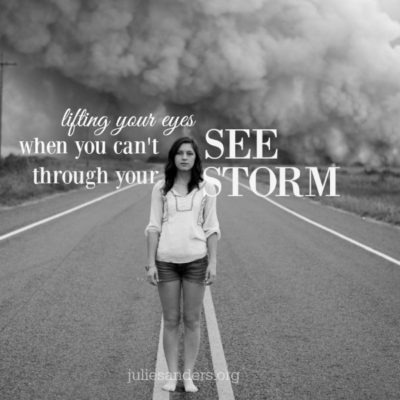
The secrets to surviving tragedy in marriage

When Marriage Monday posted a week ago, the streets of Boston were still lined with onlookers cheering for runners. Before the day was over, lives were thrown into upheaval and tragedy as the world watched horrific scenes unfold.  Marriage is hard enough without suffering trauma, but when a crisis hits, some couples struggle to stay together.
Grieving Couple Microsoft Office
If tomorrow holds unexpected tragedy for you and your mate, your marriage can survive.

We had only lived overseas for a few weeks when crisis struck our family and we watched our son’s life slipping away. While we worked to save him, it was as if time moved frame by slow frame, with screaming and shouting and loud praying all mixed in the background. In my mind I imagined the news arriving back to the States and our family becoming one of those “tragic stories” everyone remembers. Crowds of people, traffic, different languages, culture, time, and curiosity seekers stood between us and a chance at saving Jacob’s life.  God intervened and spared our son, but the scars left behind for all of us were deep.
Marriage Mondays Button #2

Tragedy strains a marriage, but couples can survive.

The Battle of Blame

Blame is natural response to trauma; it can be amplified in cultures where accountability is important, like in the United States. We have a burning desire to assign responsibility and know who is at fault for our pain. Those in the circle of impact may blame themselves for being at the “wrong place at the wrong time” or not being at the “right place at the right time.”  Somewhere in the chaos of pain, we often deflect the blame to our loved one, our spouse, wanting someone else to be responsible. The truth is, neither of us may be responsible, but we still have a natural tendency to blame ourselves and each other.

On the night of Jacob’s accident, I lay beside him on a thin, dirty mattress atop wire springs. The open window let in cold air and diesel fumes. I maneuvered around his tubes and wires to be as close as I could to give warm to our little boy. Alone in the darkness, with just the sound of distant chanting and my own prayers, I wrestled with the accusing voices of blame. Why wasn’t I watching at that moment? Why wasn’t Jeff watching? Why did those people let it happen? Who’s to blame?  Marriage only survives trauma if blame gives way to forgiveness.

The Balm of Forgiveness

The best answer for blame is forgiveness. No one deserves to be forgiven for our wrongdoing or our failures, but we are. “There is therefore now no condemnation for those who are in Christ Jesus,” (Romans 8:1). God knows we are bound to unintentionally and intentionally offend and cause pain, but Jesus covers over our crimes. Instead of turning on each other when our weaknesses result in pain, decisions lead to disaster, or poor judgement leads to tragedy, we must know we do not stand condemned before God if we are in Christ Jesus. To extend grace to each other is to display the love and forgiveness Christ shows us.

What about those who are truly guilty? Sometimes tragedy comes from intentional evil, and when it does, we can trust the only wise God as judge. To consume ourselves with making men pay can devour a couple so that all that they share is a mutual desire for revenge and a craving for repayment. Couples in crisis caused by the guilty can know that “God is a righteous judge, and a God who feels indignation every day,” (Psalm 7:11). He will ultimately make all things right.

The Blessing of Prayer

In addition to clinging to each other in the aftermath of tragedy, married partners find strength together in prayer. Marriage is meant to be the place of greatest trust and vulnerability, so what better place to throw ourselves before the Lord in uninhibited cries for understanding, comfort, and strength than with the one person who has loved and known us best?

God knows we are weak and frail in our times of trial, but even then He is available to us. “But he said to me, ‘My grace is sufficient for you, for my power is made perfect in weakness,’” (2 Corinthians 12:9a). As we cling to God, we cling together and endure.

Let go of blame. Extend forgiveness. Cling together to God in prayer.

Couples who face tragedy will find healing and hope through the ministry of Grief Share.  You can find a support group, sign up for daily emails, and find reliable resources to help you through a time of grieving. I recommend Grieving with Hope: Finding Comfort as You Journey through Loss.

Check out these other Grief and Healing resources in this Amazon resource list:

TMI Link up
Click to tweet this post to share with others.

FacebookPinterestTwitterShare

FacebookPinterestTwitterShare
By Julie Sanders

How to be safe in a dangerous world

We were out for dinner, sitting about 3 tables from the front doors of the restaurant, when the blast went off.  The windows rattled and we felt the floor shake as diners and workers responded with immediate silence. It’s the pause that comes when you realize you’re in the midst of a crisis.

Paramedic Transporting Patient by GurneyIn a crisis, response can mean the difference between life and death. Our children were beyond sippy cups, but not yet doing long division. My eyes met Jeff’s as we considered our options. Dive under the table? Run out the back exit? Separate to assess the situation? We opted to abandon our meals and run for the car, where we could see smoke wafting from the lot across the street = far enough to make us feel better. We couldn’t see anyone injured or exactly what was happening. I just wanted to get home and feel safe. We drove home immediately to where we pulled the iron gates behind us and ran into the house surrounded by walls holding shards of threatening glass pieces. We bolted our doors and went inside to wait … and breathe. Just weeks before, a military coup had sent helicopters flying within sight of our windows, and we held our breath to wonder if the two were connected.

Back in the United States a month later, my mom gently told me that I needed to relax. She said I was always “on alert.”  It was so hard to feel safe after living on edge. She was right, because once you realize you live in an unsafe world, your world is never the same. In much of the world, in places like Syria and Afghanistan, women know what it’s like for uncertainty to be “normal.” Most people in the United States haven’t ever experienced that sense of insecurity, but it’s becoming more familiar due to horrific events like the Newtown shooting and the Boston bombing.  Can you feel safe when the world is a dangerous place?

Having lived with the need to be “on alert,” I have learned some keys to being and feeling safe.

How can you be safe in a dangerous world?

  1. Don’t worry about your stuff. Things just don’t matter; people do.  Matthew 6:19-20
  2. Travel light as a regular habit.  Matthew 6:7-8
  3. Act quickly in a crisis, but think first.   James 1:5
  4. Learn to be aware of your exits at all times.    1 Corinthians 10:13
  5. Stay together despite the urge to separate.    Ecclesiastes 4:9-12
  6. Be calm for the sake of others, especially your children.   Matthew 19:13-15
  7. Have a meeting place at home & special events.   Psalm 127:1
  8. When trouble hits, DO. NOT. ARGUE.  Kids or adults.   1 Corinthians 13:4-7
  9. Talk about what happened later; fight the urge to be silent.   Psalm 38:8-10
  10. Put yourself in God’s hands; He is good & strong & constant.   Psalm 46:1

I’ve found this Psalm gives me great comfort & confidence; I hope it blesses you too.

Psalm 121 ~ A Psalm of comfort and confidence

I lift up my eyes to the hills. from where does my help come?
My help comes from the Lord, who made heaven and earth.

He will not let your foot be moved; he who keeps you will not slumber.
Behold, he who keeps Israel will neither slumber nor sleep.

The Lord is your keeper; the Lord is your shade on your right hand.
The sun shall not strike you by day, nor the moon by night.

The Lord will keep you from all evil; he will keep your life.
The Lord will keep your going out and your coming in from this time forth and forevermore.

You can click to tweet this post via Twitter!

FacebookPinterestTwitterShare

FacebookPinterestTwitterShare
By Julie Sanders

The answer to Human Trafficking

Do you ever have a moment when you’re overwhelmed by one of the “wrong” things of the world?  Maybe it’s as basic as fighting a bad cold (I’m in that group this week), or maybe it’s as personal as the loss of a loved one. This Saturday I’m helping to host a training day about Human Trafficking in our state. When I consider that the scenic by-ways of the region I call home aTennessee highway mapre also routes for the transport of commercially exploited people, my heart doesn’t want to believe it.  Knowing the children advertised online, younger than my own children, are just a handful of an estimated 27 million slaves around the globe makes me feel … sick. Where did such ugliness begin, and does God have an answer for it?

It started in Genesis 3 with the first suggestion that forbidden fruit would really be satisfying and without consequence.  Such a lie. But God responded with a promise that He would get life back, using a child of the woman herself, and He did. It’s the one thing that gives me hope when I learn things like the average age of entry into prostitution in my own country is between 12 and 13 years old, or that children are moved from state to state so their captors won’t be caught, or that life expectancy is only 7 years once a child is taken into trafficking.  Only God can redeem such evil.

It’s timely that this Human Trafficking Training Day is in March, the same month we celebrate Resurrection Day.

Because Jesus conquered the ugliness of pain, death, and slavery, every person has hope of healing, of getting life back.  “He himself bore our sins in his body on the tree, that we might die to sin and live to righteousness. By his wounds you have been healed.”  (1 Peter 2:24)

If we know Christ and how His Resurrection changes OUR lives, then we should have a desire like Paul: “that I may know him and the power of his resurrection, and may share his sufferings, becoming like him in his death, that by any means possible I may attain the resurrection from the dead.” (Philippians 3:10-11)  As Paul knew the Resurrected Jesus personally, it changed the way he spent his life, changing him from an evil name on the “Most Wanted” list to a new man who was a spokesman for God’s power to change lives. “Therefore, we are ambassadors for Christ, God making his appeal through us. We implore you on behalf of Christ, be reconciled to God. For our sake he made him to be sin who knew no sin, so that in him we might become the righteousness of God.”  (2 Cor. 5: 20,21)

People who really “get” the Resurrection live to help others “get” it too.

Resurrection Do Not DepartResurrection Day (Easter to some) is my favorite holiday.  It gives everything else meaning, and it answers evils like Human Trafficking with the promise of abundant life.  Come with me to Do Not Depart this month, where our team will be sharing Bible Study Tools about the Resurrection.  They’ll include printables and helps for your personal quiet time, study, and influence.

See the list of the people in the Bible who were raised from the dead, a glimpse of our future Resurrection.

I appreciate your prayers this week as we prepare for a powerful day of equipping people in our region to understand Human Trafficking and how God is moving against it here.

FacebookPinterestTwitterShare

FacebookPinterestTwitterShare
By Julie Sanders